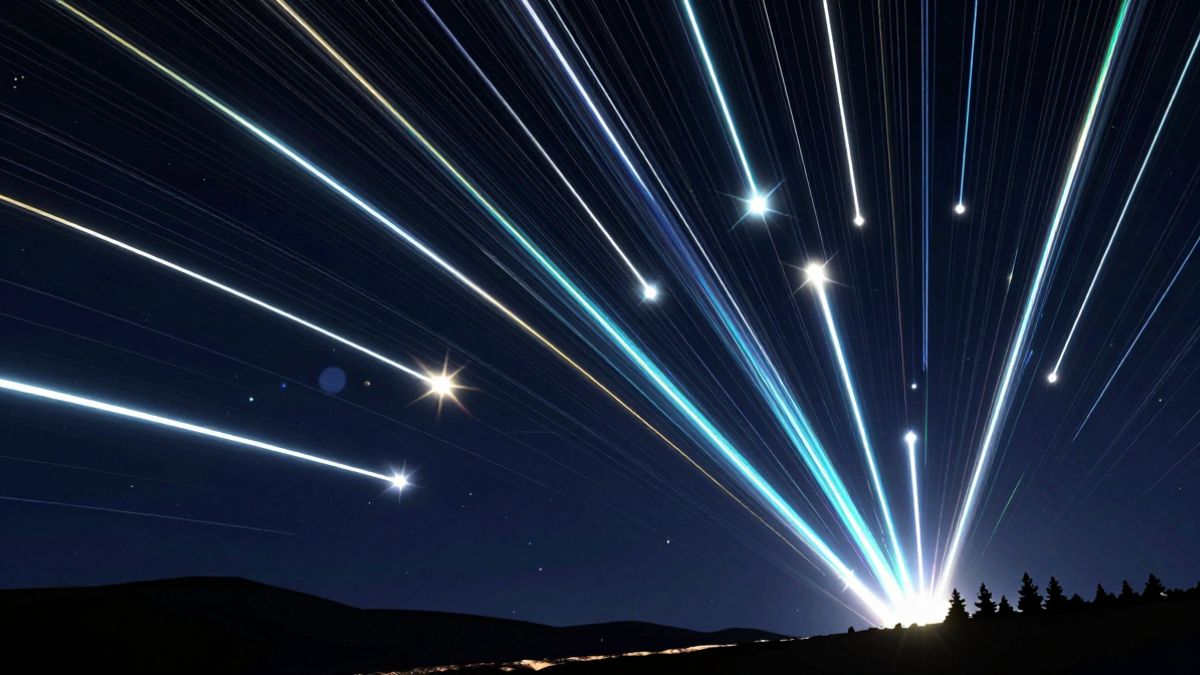
Most people will sleep through one of the year’s most spectacular celestial shows tonight. The Geminids meteor shower is peaking right now, and unlike most astronomical events, this one doesn’t require a telescope, special equipment, or even much effort. Just your eyes, a dark spot, and about 20 minutes of patience.
The Geminids are considered the best meteor shower of the year, often outperforming the more famous Perseids. Under ideal conditions, you can see up to 120 meteors per hour. That’s roughly one every 30 seconds during peak activity. But here’s the catch: most people miss it entirely because they don’t know when to look, where to look, or they make simple mistakes that ruin the experience.
This guide will walk you through everything you need to catch the Geminids at their best, including the mistakes that will guarantee you see nothing.
Best time to watch tonight
The Geminids peak between 15th and 16th December 2025, which means tonight is your prime viewing window. But timing matters more than most people realize.
The best viewing hours are between 2:00 AM and dawn (roughly 5:30 AM across most of India). Yes, that’s the middle of the night. The reason is simple: the radiant point (the spot in the sky where meteors appear to originate) is highest in the sky during these hours, and the moon will have set, giving you darker skies.
If you can’t manage the pre-dawn hours, you can still catch meteors after 10:00 PM, though the rate will be lower. The shower is active for several days around the peak, so if tonight’s weather doesn’t cooperate, try again tomorrow night.
One critical detail: give yourself at least 20 minutes. Your eyes need time to adjust to the darkness. Most people give up after five minutes and miss everything.

Where to look in the sky
Here’s where many first-timers go wrong: they stare at one spot and wait.
The meteors radiate from the constellation Gemini, which will be high in the southern sky after midnight. But here’s the trick: don’t stare directly at Gemini. The brightest and longest meteor trails appear 30 to 60 degrees away from the radiant point.
Instead, lie flat on your back and look at a wide area of sky. Let your eyes roam. The meteors can appear anywhere, and the more sky you can see, the better your chances.
If you’re in a city, face away from the brightest lights. If you’re in the northern states, the southern horizon will be your best bet. In southern India, look slightly overhead and to the south.
Don’t use binoculars or a telescope. They narrow your field of view and make it harder to spot meteors.
Phone and camera settings for beginners
Capturing meteors on a phone is challenging but possible. Here’s the honest truth: most smartphone photos of meteor showers are disappointing. But if you want to try, follow these steps.
For phones:
– Use a tripod or prop your phone on something stable
– Switch to Night Mode or Pro/Manual Mode
– Set ISO between 800 and 3200 (higher if very dark)
– Use the longest exposure your phone allows (usually 10-30 seconds)
– Set focus to infinity (tap on a distant star and lock focus)
– Use a timer or voice command to avoid shaking the phone
– Take dozens of shots; you might get lucky on one or two
For cameras (DSLR/mirrorless):
– Wide-angle lens (16-35mm works best)
– Manual mode: ISO 1600-3200, aperture f/2.8 or wider, shutter 15-25 seconds
– Focus manually on a bright star, then switch off autofocus
– Shoot in RAW for better editing flexibility
– Use an intervalometer to take continuous shots
What NOT to do: Don’t use your phone’s flash. Don’t use zoom. Don’t expect to capture what your eyes see; cameras capture light differently.
Honestly, your eyes will give you a better show than your camera. Consider just watching.

Safety and comfort checklist
A cold, uncomfortable observer is a grumpy observer who goes inside after 10 minutes. Here’s how to stay comfortable:
Warmth:
– Mid-December nights in northern India can drop to 8-12°C; in hill stations, near freezing
– Wear layers: thermal inner wear, sweater, jacket
– Bring a blanket or sleeping bag
– Wear a cap; you lose significant heat through your head
– Hot tea or coffee in a thermos
Lights:
– Turn off all outdoor lights if you’re at home
– Use a red light torch if you need to see; white light ruins night vision for 20 minutes
– Put your phone on airplane mode or face-down; the screen glow destroys dark adaptation
– Ask neighbors to dim porch lights if possible
Location:
– Get as far from city lights as you can
– Parks on city outskirts, farmland, or rooftops work
– Check that your viewing spot is safe at night
– Let someone know where you’re going
Gear:
– Reclining chair or yoga mat to lie on
– Insect repellent (mosquitoes are active even in December in many parts of India)
– Snacks and water
– Patience
Quick FAQ
What if it’s cloudy?
Check your local weather forecast. If clouds are predicted, try a different location or wait until tomorrow night. The shower remains active through 17th December, though rates drop after the peak.
Will city lights ruin it?
They reduce the number of meteors you’ll see, but you can still catch the brightest ones. Even from Mumbai or Delhi, you might see 10-20 per hour during peak times if you find a darker spot.
Can I watch with kids?
Absolutely. Make it an adventure: bring sleeping bags, hot chocolate, and tell them to make a wish on each meteor. Keep expectations realistic for younger children; waiting in the dark requires patience. Consider a shorter viewing window (30 minutes instead of two hours).
Do I need to download an app?
Not essential, but apps like Stellarium or SkySafari can help you identify Gemini and orient yourself. Just remember to use red-light mode and keep the screen dim.
What makes the Geminids special?
Unlike most meteor showers (caused by comet debris), the Geminids come from an asteroid called 3200 Phaethon. The meteors are bright, often yellow, and produce more fireballs than other showers.

What NOT to do
These mistakes will guarantee you see nothing:
- Don’t stay in a brightly lit area. Street lights, porch lights, and car headlights are your enemy.
- Don’t look at your phone every two minutes. Each glance resets your night vision.
- Don’t expect instant results. Meteor showers aren’t fireworks displays. You need patience.
- Don’t use a telescope. You’ll miss everything happening in the rest of the sky.
- Don’t go alone to an unsafe area. Meteor watching isn’t worth a safety risk.
- Don’t forget to dress warmly. Being cold will cut your session short.
The Geminids happen once a year. Tonight and tomorrow night are your only chances until December 2026. Set an alarm for 2:00 AM, grab a blanket, and spend 30 minutes under the sky. You might see something that makes you forget how cold your toes are.